From BizDom Blog
Pirelli will be the Formula 1's sole tyre supplier

Pirelli has been selected as the single tyre supplier for the FIA Formula One World Championship for a period of three years, commencing in 2011
In order to meet the Formula One teams’ requirements in terms of reliability, safety and performance, Pirelli’s engineers are already working on simulation models and tyre compounds that will be most suited to the rigours of Grand Prix racing.
Mirakle Couriers : Deaf Adults for a Professional Service

What They Do

Mirakle Couriers is a courier company with a difference as we employ only deaf adults. Deafness is an invisible disability, and has been largely ignored in India. All the staff members including delivery personnel are deaf.
Our business model is based on creating a service driven profitable enterprise that uses the deaf. To this end, we marry professional excellence with social cause. While our services are currently available only in Mumbai, we plan to extend our operations to other cities soon.
Why Deaf
India has one of the highest deaf populations in the world. Due to strong stigma in the society there are virtually no job opportunities for this isolated population. Outdated vocations such as candle making have shunned this community; Mirakle Couriers wants to change this grim scenario. It wants to economically empower this community and make them more visible in the Indian society.
Origin of 4 common items
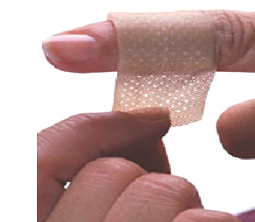
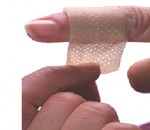
BAND-AIDS (1921)
In 1921, Earle Dickson, and employee of Johnson & Johnson, married a woman who kept injuring herself in the kitchen.
* As he repeatedly bandaged her cuts and burns with gauze and adhesive tape, he became frustrated; the clumsy bandages kept falling off. So he decide to create something “that would stay in place, be easily applied, and still retain its sterility.” He stuck some gauze in the center of a piece of adhesive tape, and covered the whole thing with crinoline to keep it sterile. It worked.
* He made up a batch for his wife and took a few in to show his co-workers. The company’s owner, James Johnson, heard about it and asked for a demonstration-which convinced him to begin manufacturing the product.
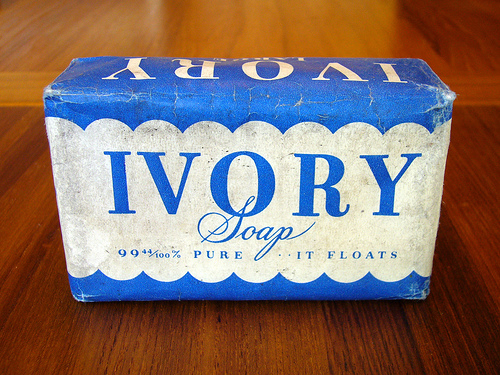
IVORY SOAP (1879)
* One day in 1879, the man operating Procter & Gamble’s soap mixing machine forgot to turn it off when he went to lunch. On returning, he discovered that so much air had been whipped into the soap that it actually floated.
* For some reason, the batch wasn’t discarded-it was made into bars and shipped out with the other White Soap. Soon, to their surprise, P&G was getting letters demanding more of “that soap that floats.” So they started putting extra air into every bar.
* Now that they had a unique product, they needed a unique name. And they found it in the Bible. Procter was reading the 45th Psalm-which say: “All thy garments smell of myrrh, and aloes, and cassia, out of the ivory palaces…”-when it hit him that ivory was just the word he was looking for.
* In October 1879, the first bar of Ivory Soap was sold.
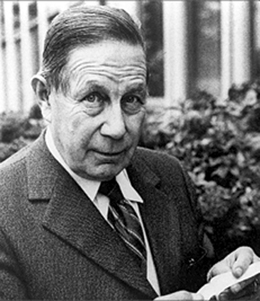
VELCRO (1957)
A young Swiss inventor named George De Mestrel went for a hike one day in 1948. When he returned, he was annoyed to find burrs stuck to his clothes. But his annoyance turned to fascination. Why, he wondered, wouldn’t it be possible to create synthetic burrs that could be used as fasteners?
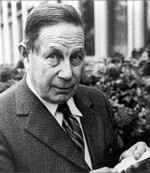
* Most people scoffed but a French weaver took him seriously. Using a small loom, the weaver hand-wove two cotton strips that stuck together when they touched. The secret: one strip had hooks, the other had loops.
* Years passed; De Mestrel experimented constantly. Finally he found a suitable material-nylon, which, it turned out, became very hard when treated with infrared light.
* Now he knew how to make loops by machine-but he still couldn’;t figure out how to mass-produce the hooks.
* Finally a solution hit him. He bought a pair of barber’s clippers and took then to a weaver. With the clippers, he demonstrated his idea-a loom that snipped loops as it wove them, creating little nylon hooks. He worked onthe project for a year-and when it was finally completed, Velco (“Vel” for velvet, “cro” for crochet) was born. The product had taken a decade to perfect.
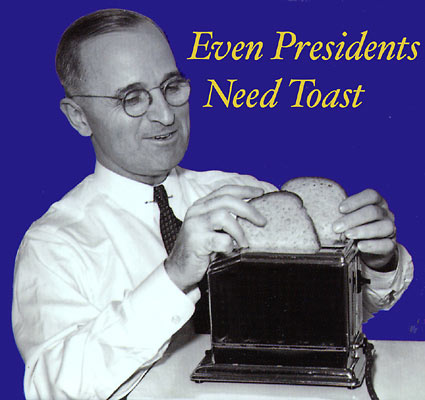
POP-UP ELECTRIC TOASTER
* There was a built-in problem, though-the bread had to be constantly watched or it would burn to a crisp.
* In 1919, Charles Strite, a Minnesota factory worker, got sick of the burnt toast in the company cafeteria. So, in his spare time, he designed and patented the first pop-up toaster. Then he went into business manufacturing them. It took years to work out the bugs, but by 1926, Strite’s “Toastmasters” were relatively fireproof.
* A few years late, a New York businessman purchased Strite’s company and invested heavily in advertising-which proved to be the key ingredient in making the toaster a common household appliance.
In 1921, Earle Dickson, and employee of Johnson & Johnson, married a woman who kept injuring herself in the kitchen.* As he repeatedly bandaged her cuts and burns with gauze and adhesive tape, he became frustrated; the clumsy bandages kept falling off. So he decide to create something “that would stay in place, be easily applied, and still retain its sterility.” He stuck some gauze in the center of a piece of adhesive tape, and covered the whole thing with crinoline to keep it sterile. It worked.
* He made up a batch for his wife and took a few in to show his co-workers. The company’s owner, James Johnson, heard about it and asked for a demonstration-which convinced him to begin manufacturing the product.
IVORY SOAP (1879)
Harley Procter and his cousin, chemist James Gammble, came up with a special new soap in 1878. It was smooth and fragrant and produced a consistant lather… but it wasn’t Ivory-it was called White Soap-and it didn’t float.
* One day in 1879, the man operating Procter & Gamble’s soap mixing machine forgot to turn it off when he went to lunch. On returning, he discovered that so much air had been whipped into the soap that it actually floated.
* For some reason, the batch wasn’t discarded-it was made into bars and shipped out with the other White Soap. Soon, to their surprise, P&G was getting letters demanding more of “that soap that floats.” So they started putting extra air into every bar.
* Now that they had a unique product, they needed a unique name. And they found it in the Bible. Procter was reading the 45th Psalm-which say: “All thy garments smell of myrrh, and aloes, and cassia, out of the ivory palaces…”-when it hit him that ivory was just the word he was looking for.
* In October 1879, the first bar of Ivory Soap was sold.
VELCRO (1957)
A young Swiss inventor named George De Mestrel went for a hike one day in 1948. When he returned, he was annoyed to find burrs stuck to his clothes. But his annoyance turned to fascination. Why, he wondered, wouldn’t it be possible to create synthetic burrs that could be used as fasteners?
* Most people scoffed but a French weaver took him seriously. Using a small loom, the weaver hand-wove two cotton strips that stuck together when they touched. The secret: one strip had hooks, the other had loops.* Years passed; De Mestrel experimented constantly. Finally he found a suitable material-nylon, which, it turned out, became very hard when treated with infrared light.
* Now he knew how to make loops by machine-but he still couldn’;t figure out how to mass-produce the hooks.
* Finally a solution hit him. He bought a pair of barber’s clippers and took then to a weaver. With the clippers, he demonstrated his idea-a loom that snipped loops as it wove them, creating little nylon hooks. He worked onthe project for a year-and when it was finally completed, Velco (“Vel” for velvet, “cro” for crochet) was born. The product had taken a decade to perfect.
POP-UP ELECTRIC TOASTER
The first electric toasters, which appeared around 1900, were primitively constructed heating coils that were terrible fire hazards. However, they were a luxury-it was the first time in history that people didn’t need to fire up a stove just to make a piece of toast.
* There was a built-in problem, though-the bread had to be constantly watched or it would burn to a crisp.
* In 1919, Charles Strite, a Minnesota factory worker, got sick of the burnt toast in the company cafeteria. So, in his spare time, he designed and patented the first pop-up toaster. Then he went into business manufacturing them. It took years to work out the bugs, but by 1926, Strite’s “Toastmasters” were relatively fireproof.
* A few years late, a New York businessman purchased Strite’s company and invested heavily in advertising-which proved to be the key ingredient in making the toaster a common household appliance.
Pan Vilas positions itself on “Shauq”
Pan Vilas, a premium pan masala offering from Godfrey Phillips India, made its entry into the category with a commercial featuring actors Manoj Bajpai and Jameel Khan.
Help detective Lalli crack a murder mystery
Detective writer Kalpana Swaminathan, a surgeon by profession, is creator of Madam Lalli. In 2006, Swaminathan wrote her first volume ‘The Page 3 Murders’ and followed it with the ‘The Gardener’s Song’ in 2008. ‘The Monochrome Madonna’, the third in the series, published this month.
Publishers Penguin Books-India, have launched an online game centred around the book in which the players help detective Lalli crack a murder mystery in a Mumbai apartment.
Play
Polo Ralph Lauren Signs Wimbledon Apparel Deal Through 2015
The American designer fashion label Polo Ralph Lauren has extended its partnership with The All England Club until 2014. In 2006 Polo Ralph Lauren became the first apparel supplier in Wimbledon history to create an official range of uniforms for the tournament. And, under terms of the new agreement, Polo Ralph Lauren will continue in its role as the official outfitter of The Wimbledon Championships. Polo Ralph Lauren will dress all on-court officials as well as presenting the tournament’s first ever Legends Clinic, an interactive tennis clinic featuring three times Wimbledon champion Boris Becker.
Subscribe to:
Posts
(
Atom
)